
Everything from the cabinet outwards
Eight disciplines, one engineering team — covering production test equipment, development & qualification rigs, and component OEM & MRO test stands.
Real-time control, engineered for test
All aspects of system control are handled, from high-level operator interface and machine sequencing to low-level, time-critical closed-loop PID with feed-forward terms for loop optimisation and spike suppression. A top-end graphical interface on an industrial PC commands a real-time embedded controller running rig motion control, sequencing and timing, load profiling, alarm monitoring and safety shutdown.
Custom algorithms are developed and optimised in the controller to eliminate the effect of non-linearities found in the rig or the unit under test.
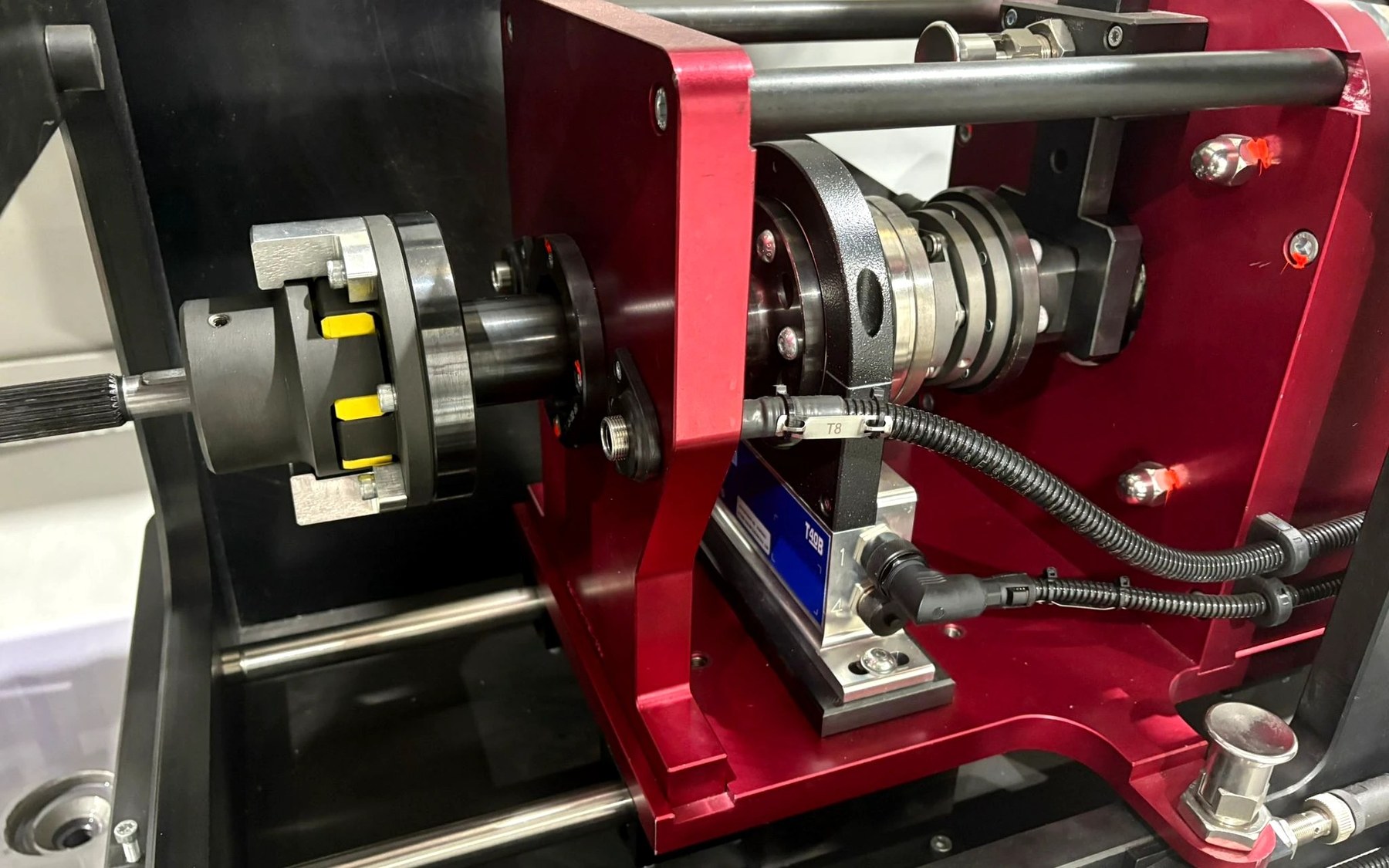
Single and multi-channel closed-loop servo systems
More than three decades of servo-hydraulic and electric motion control: position, speed, load, torque and pressure loops, with digitally variable PID terms to cope with extreme static and dynamic operation, and gain scheduling for changing conditions across the test envelope.
Our servo systems interface to the full standard range of instrumentation — load cells, torque and pressure transducers, flow meters, tachometers, temperature sensors, and rotary and linear position devices including LVDTs, RVDTs and encoders.
See everything. Log everything. Prove everything.
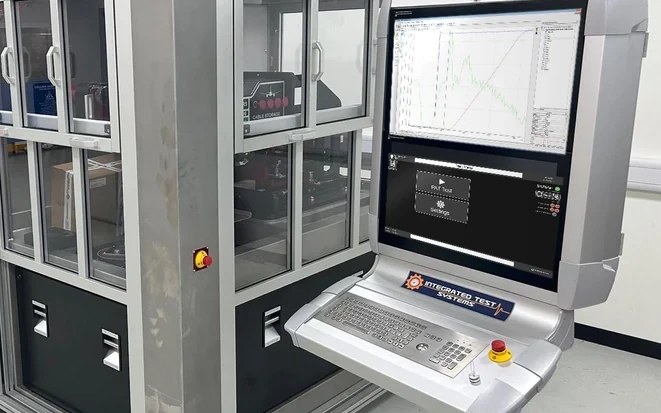
PC-based acquisition developed in-house, synchronised over EtherCAT with high channel counts. Real-time scope-style display with simultaneous logging, offline charting and X-Y analysis, waveform generation, automated pass/fail limit checking, and report generation straight from the rig.
- High channel-count synchronised acquisition
- Automated pass/fail with PAT report generation
- Data logging, export and full traceability
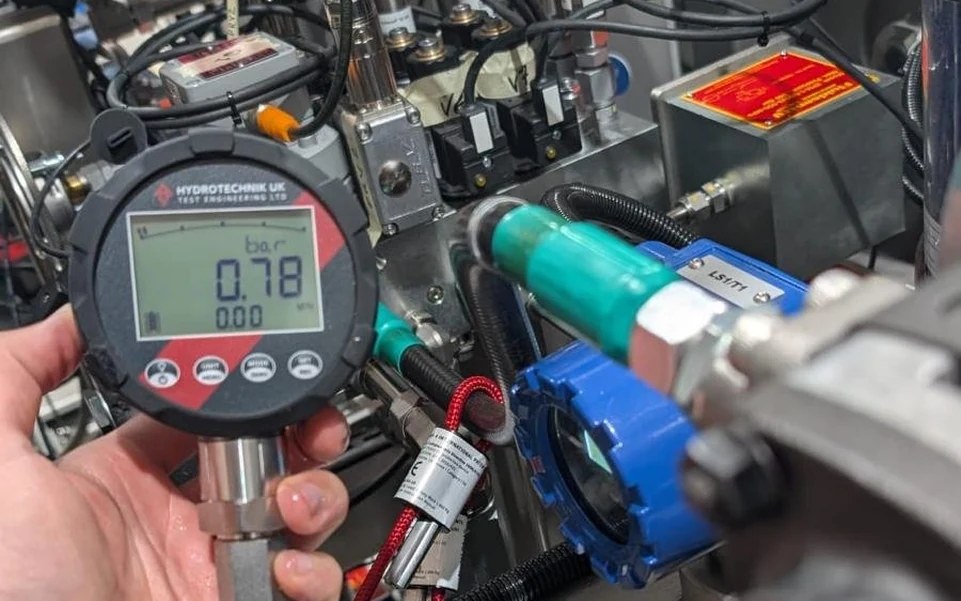
Measured properly, traceable always
Signal conditioning, scaling and calibration for pressure, flow, temperature, force, torque, speed and position. We handle the full range of analogue and digital signals — current loop (4–20 mA), voltage (±10 V), strain-gauge bridge, LVDT/RVDT, thermocouple/RTD and encoder — across both measurement inputs and command outputs. Wiring and labelling are specified to resist degradation by the working fluids of the rig.
Accredited calibration is delivered with our metrology partner Trescal, whose UK laboratories are UKAS-accredited to ISO/IEC 17025, with traceable certificates for every instrument.
Failsafe by design
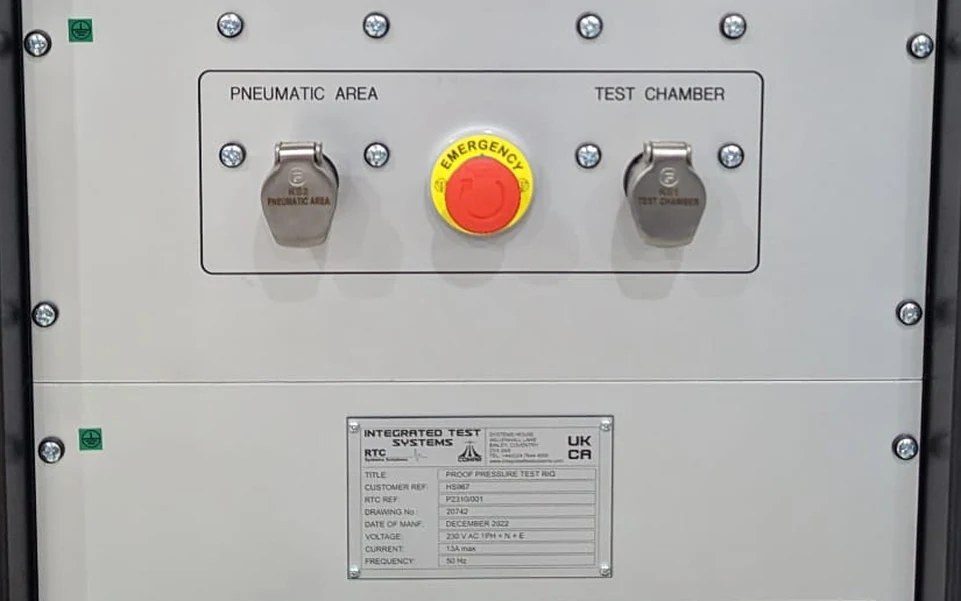
Safety systems designed and validated by TÜV SÜD-qualified functional safety engineers. TwinSAFE safety control, E-stop and guard-monitoring philosophy, lock-out/tag-out provision and machinery safety compliance to the Machinery Directive with IEC 61508 (SIL) and ISO 13849 (PL).
A system is failsafe if it remains in — or moves to — a safe state in the event of failure. We design to exclude hazards rather than manage them, with redundant dual-channel architectures where higher safety levels demand it.
De-risk before metal is cut
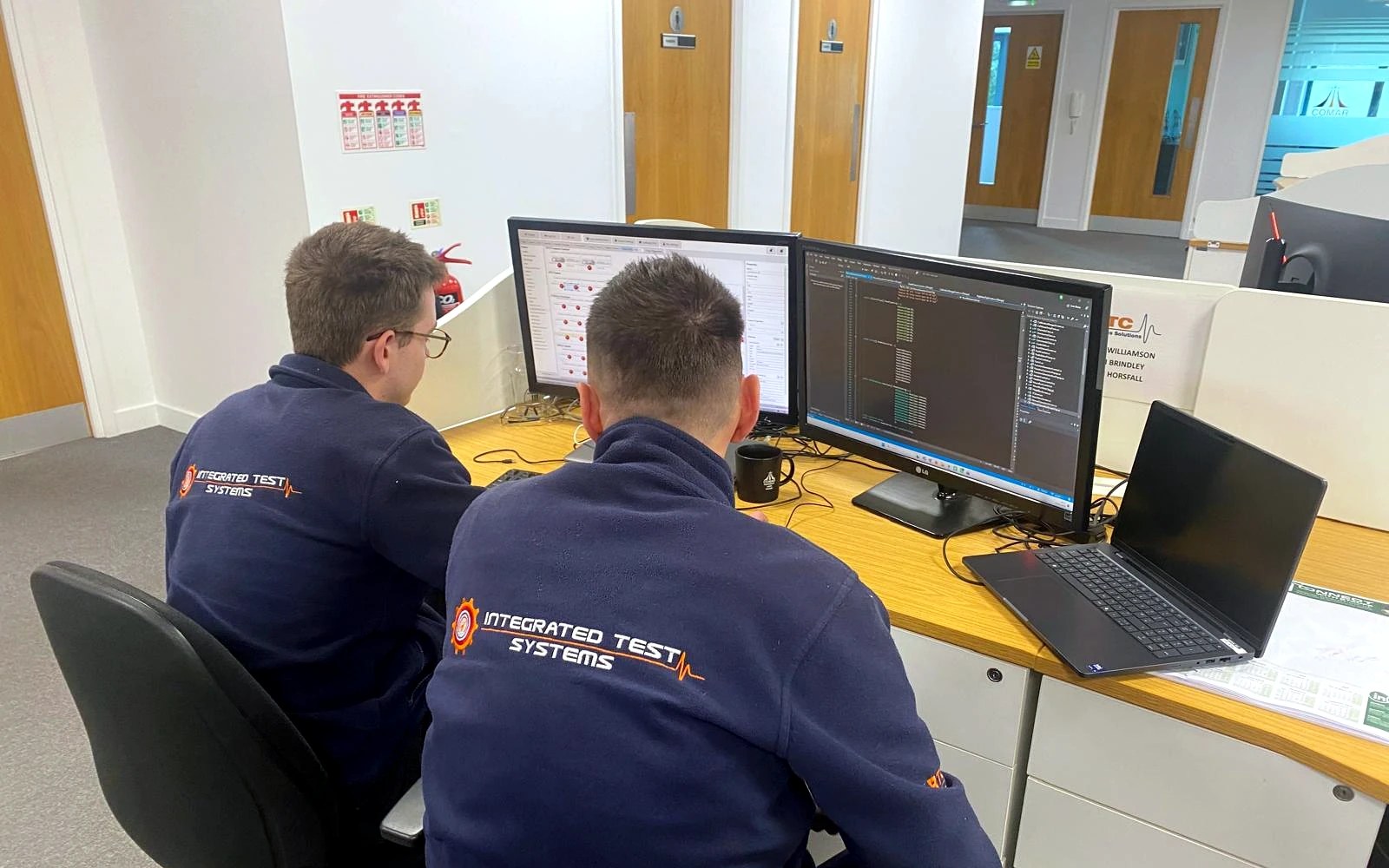
Model-based design in MATLAB/Simulink, with control software implemented in Pascal, plus hardware- and software-in-the-loop testing and virtual commissioning that proves control behaviour against a simulated rig — cutting on-site commissioning time and programme risk. Systems are designed and built to conform with the Machinery Directive and the applicable electrical directives (Low Voltage and EMC).
From panel to plant
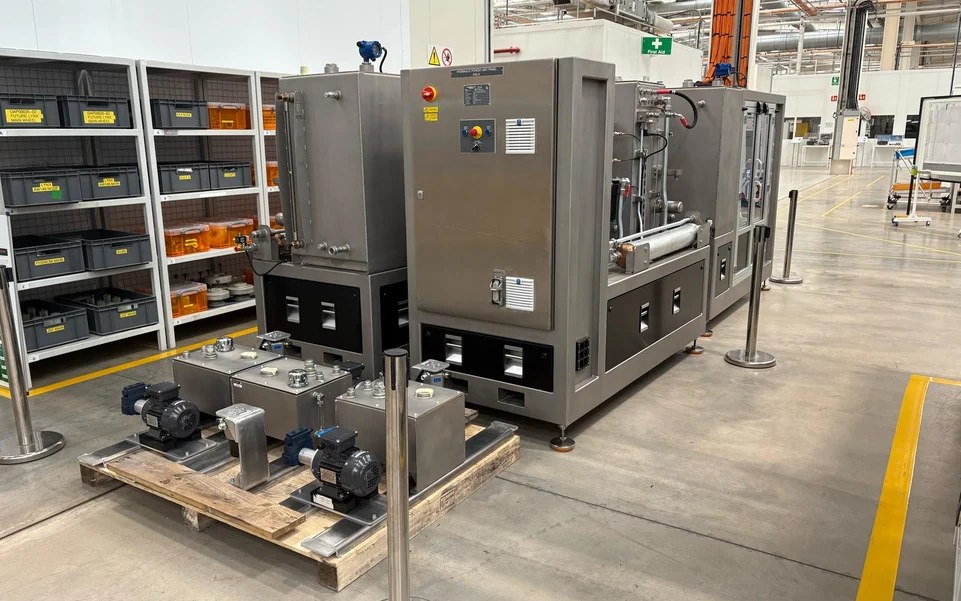
IP65-rated stainless electrical enclosures, variable-speed drives for main pumps, structured panel build and full site electrical and instrumentation installation. Facility-scale work includes hydraulic ring-main control and SCADA for hangar test installations.
IO checkout to FAT, SAT and beyond
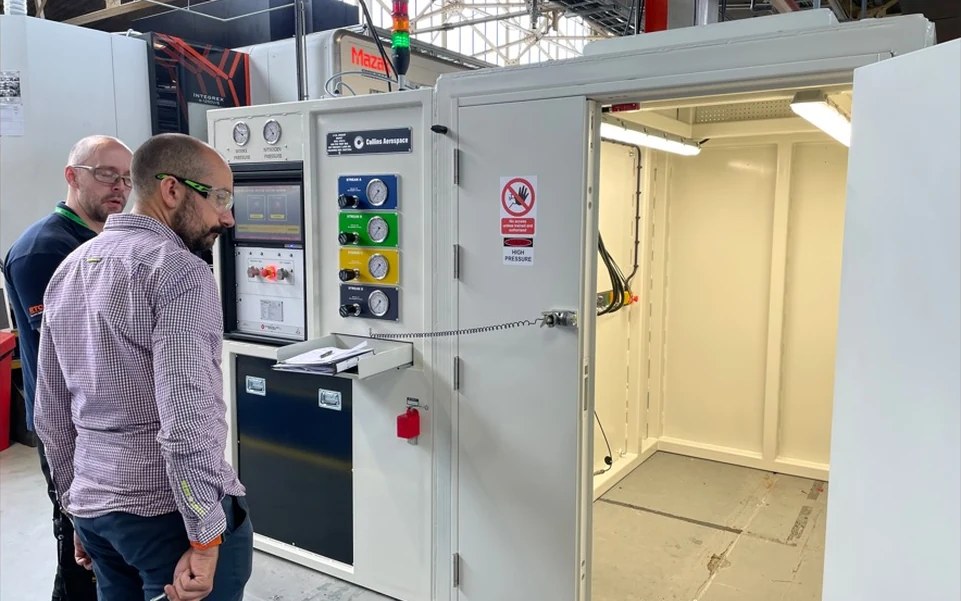
IO checkout, loop checks and fault-finding; factory acceptance testing with up to 500 kVA of available power so customers witness full operation before delivery; site acceptance and commissioning; then obsolescence monitoring, upgrades and service contracts for the life of the rig.
Complete electro-hydraulic test rigs
Many rigs need more than control and software — they need the hydraulic, pneumatic and mechanical systems that drive the test itself. As part of Integrated Test Systems, RTC delivers complete electro-hydraulic and servo-hydraulic test rigs together with Comar Fluid Power, our sister company in Telford, who specialise in bespoke fluid power, hydraulic power units, manifolds and mechanical design and build.
One group, one point of contact — from the control cabinet and test software through to the power pack, manifold and mechanical structure.
Visit Comar Fluid Power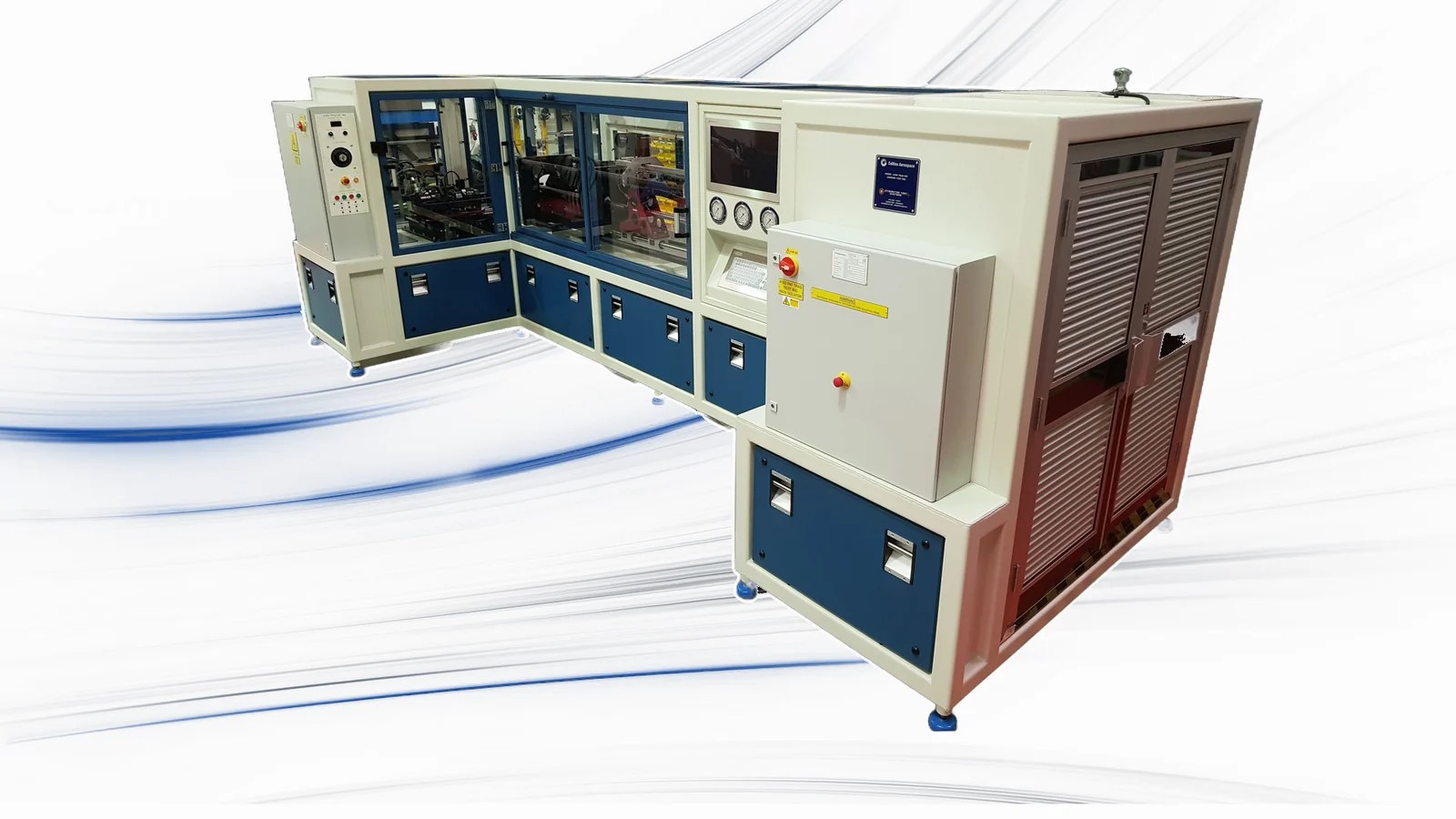
Common questions
What kinds of test rig does RTC build?
RTC builds development, qualification and production test rigs across aerospace, automotive and industrial sectors — from single-channel servo benches to multi-axis structural, actuation and electro-hydraulic rigs, automatic test equipment (ATE) and hardware-in-the-loop systems. Every rig is delivered turnkey: control, software, electrics, instrumentation and data acquisition under one roof.
Do you design the control system and the test software in-house?
Yes. Control-system architecture, closed-loop servo control, instrumentation, data acquisition and bespoke test software are all engineered in-house on a Beckhoff TwinCAT platform, so a single team owns the rig from concept to commissioning.
Can you work to our specification rather than a catalogue product?
Every rig is bespoke. RTC specialises in non-standard, customisation-heavy and integration-led applications where an off-the-shelf product won't fit.
Do you handle functional safety?
Yes. TÜV SÜD-qualified functional safety engineers design failsafe emergency-stop and safety-rated control to the relevant standards as part of the rig.
Is instrumentation calibrated and traceable?
Yes. Instrumentation is calibrated and traceable to national standards through an established Trescal/UKAS calibration partnership.